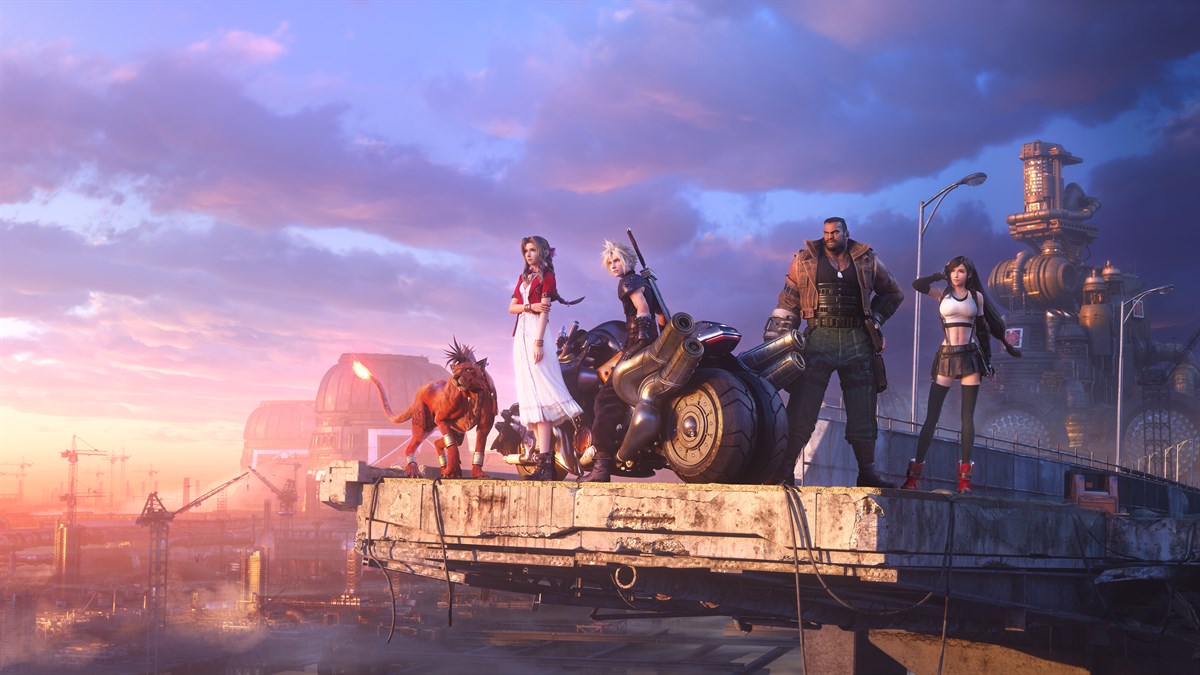
Final Fantasy VII Remake Intergrade arrives on Xbox Game Pass on October 29, giving a new audience a reason to try its hybrid combat. The system blends direct action with ATB commands, party switching, tactical pauses, and optional streamlined settings that let players tune the experience.
A new Game Pass wave brings an older combat experiment to fresh players
Final Fantasy VII Remake Intergrade arrives on Xbox Game Pass on October 29, 2026, according to Xbox Wire. Its hybrid battle system is one of the most recognizable parts of the remake: it combines real-time movement and attacks with strategic commands selected through menus. That design gives new players a useful reason to revisit how a classic RPG can change its pace without abandoning tactical decisions.
Instead of choosing between a fully turn-based system and an action game, the remake lets the player build pressure through direct attacks, then spend Active Time Battle charges on abilities, spells, and items. You are still moving through the arena, but the most consequential actions ask you to think about resource use and enemy weaknesses. It is a blend of reflex and planning rather than a simple replacement of one style with another.
Square Enix has described the system as a way to make battles feel immersive while still offering command-based decision-making. That intent shows in how the game shifts attention: you can stay active in the fight, or open a tactical menu to make a choice. The feature gives different types of players room to engage with the same encounter at their preferred pace.
ATB turns ordinary attacks into a resource-building decision
The ATB gauge is central to the combat loop. Direct attacks and actions build charge that can be spent on stronger commands. This means basic attacks are not just filler between special moves; they help create the opportunity to use the abilities that define a character’s role. Players have to decide whether to keep attacking, defend, reposition, or spend a charge now.
That choice helps battles stay active without making every moment about rapid button presses. A player may spend an ATB segment on a spell to exploit a weakness, use an ability to deal concentrated damage, or hold a resource for a moment when an enemy is more vulnerable. The best option depends on the encounter, so the system rewards paying attention to what the enemy is doing.
Because commands are limited by ATB, using the strongest move every time it becomes available is not always ideal. You may want to save a charge for healing, a stagger opportunity, or a target that is about to become dangerous. The game’s tutorial and ability descriptions explain exact effects; the broader feature is that routine actions and tactical spending feed into each other.
Party switching makes combat feel like a team, not one hero’s combo
The game lets players switch between party members during battle, and each character brings a different way to interact with enemies. Cloud’s close-range pressure, Barret’s ranged attacks, Tifa’s focused damage, and Aerith’s magic-oriented tools create different tactical situations. Switching is not only a way to see another animation; it can help the player respond to range, positioning, or a party member’s role.
This is important because the enemy may not be equally vulnerable to every approach. A flying target, a guarded opponent, or a group of weaker enemies can each reward a different character’s toolkit. Paying attention to what the current party member can do helps the player avoid forcing one strategy into every encounter. The combat system becomes a series of small team decisions rather than a single attack string.
Players new to the game can start by learning one useful action for each character rather than trying to master every ability. Once the basics are clear, swapping at the right moment can make fights feel smoother. The goal is not to change characters constantly; it is to recognize when a different role might answer the current problem better.
Tactical Mode gives players a moment to think
When players open the command menu, Tactical Mode slows the action and lets them choose an ability, spell, or item. This creates a pause inside a real-time battle without turning the entire encounter into a traditional turn-based sequence. Players who need time to compare options can use the menu to consider costs and effects before committing.
Tactical Mode can make the system more approachable, especially in a fight with multiple enemies or a new boss pattern. You can check party conditions, choose a target, and spend ATB deliberately. It also lets the player enjoy some of the strategic feel of the original command menu while still moving through a modern action-oriented battle.
There is no need to treat slower decision-making as a flaw. The game is designed around a hybrid approach, and menu-based choices are part of its identity. Use the pause to understand what each option does, then return to direct control when you know what you want. Over time, common decisions become familiar and the transition between action and commands feels natural.
Classic and streamlined options widen the audience
The remake includes ways to adjust how much active input combat demands. Square Enix has discussed Classic Mode as an option that automates basic actions while letting the player focus on selecting commands. More recent platform versions also include a Streamlined progression feature with powerful settings such as increased gauges and damage limits, intended to help players focus on the story and combat spectacle.
These options are valuable because not every player wants the same challenge. Someone may want to enjoy the story without repeating difficult fights, while another player may prefer to manage the default action-and-command rhythm. Options let people choose how much attention to give to combat without changing the fact that the system offers strategic tools.
If you are starting through Game Pass, read the settings descriptions and choose the mode that makes the game enjoyable for you. You can begin with standard play and change later if the combat feels too demanding, or use a more relaxed option from the start. The right setting is the one that helps you stay engaged with the story, characters, and battles.
Stagger creates a satisfying payoff for understanding an enemy
The combat system encourages players to learn how an enemy reacts to pressure. Attacking and using effective abilities can build toward a stagger, which creates a stronger opportunity to deal damage. That creates a readable rhythm: learn the threat, apply the right kind of pressure, then use the opening. It makes enemy knowledge part of the feature rather than an optional extra for advanced play.
Different enemies can ask for different tools, so a spell or ability that works well in one fight may be less useful in another. Read enemy descriptions, experiment with party members, and pay attention to battle feedback. If an attack seems ineffective, try another approach rather than repeating the same action just because it is familiar.
Once an enemy is staggered, the player has a chance to turn preparation into a clear payoff. Save a strong ability or limit attack for an opening when possible, but do not worry about perfect execution in every fight. The satisfaction comes from seeing the encounter change because you understood what the enemy was asking you to do.
Why the system still works for a new platform audience
The Game Pass arrival brings Final Fantasy VII Remake Intergrade to players who may not have followed its earlier platform releases. The hybrid system gives them a clear entry point: you can attack directly, use menus when you want a tactical pause, and learn party roles over time. It offers a more flexible first hour than a system that demands mastery before the story can unfold.
For returning players, the feature is worth revisiting because combat can feel different when you approach it with more knowledge. You may recognize enemy patterns sooner, use the ATB gauge more intentionally, or switch characters to solve a problem instead of relying on one favorite. Intergrade’s additional episode and platform options add more reasons to return, but the core battle design remains a strong reason to play.
A good hybrid system should make both action and planning matter. Final Fantasy VII Remake Intergrade does that by tying tactical commands to the momentum of real-time fights. The result is a battle experience that can be adjusted for comfort while still giving players interesting decisions. That balance helps the game feel approachable without making its combat shallow.
CHECK THE ORIGINALS.
Facts and update details above are based on these official sources. Details can change as the game is updated.
Loading comments…