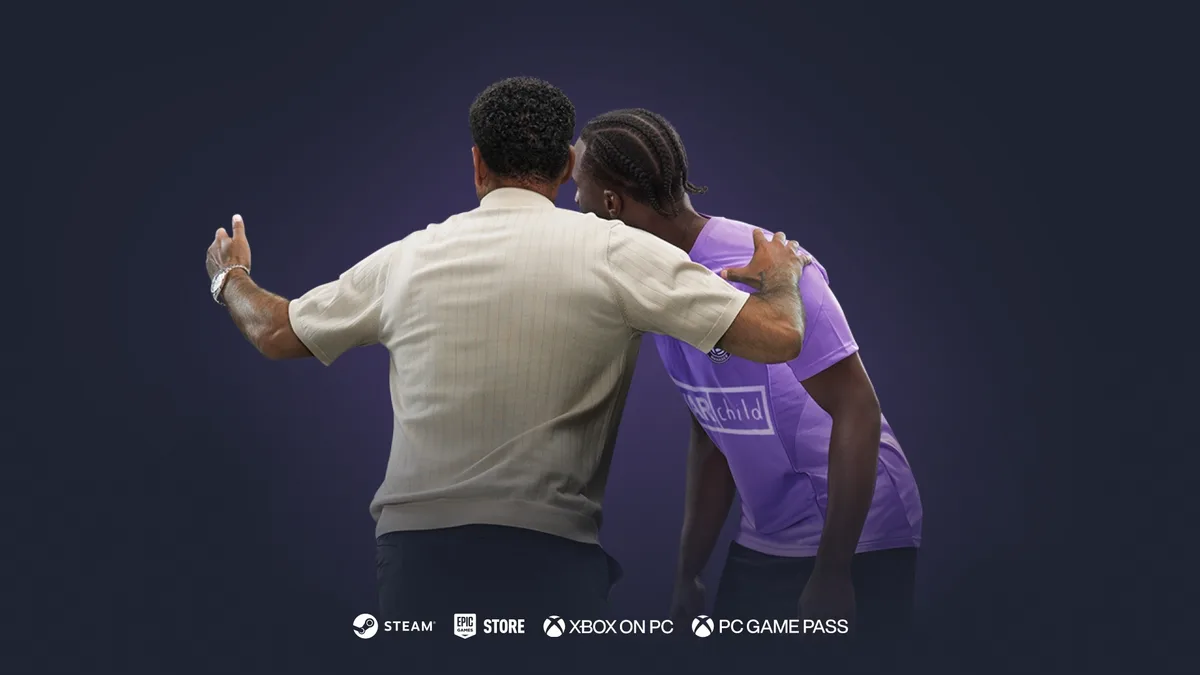
FM27's Tactical Effectiveness system is designed to keep a club's identity responsive to training, player form, and real football events. We examine what that means for managers.
A system that refuses to stand still
Football Manager 27 is scheduled for its full release on November 10, 2026, while a limited PC and Mac Launch Preview has already given some players an early look. Sports Interactive's official feature material highlights Tactical Effectiveness as an overarching system connecting tactics, training, scouting, and more. The phrase sounds abstract, but its design question is familiar: how well can a squad actually carry out the football you want to play?
Previous Football Manager players will recognize the idea of tactical familiarity. FM27's developer says the new system builds on that foundation while changing with your decisions, player performances, and wider events. That suggests a manager cannot simply select a formation in August, max out a bar, and assume the same plan will suit every opponent and every phase of the season. The tactical identity of a club becomes something to maintain and adapt.
- ⚽ Training influences how a tactical plan works.
- 📊 Player performances and events can shift effectiveness.
- 🧠 The match engine adds new tactical tools and movement.
Familiarity is not the same as effectiveness
A team may know a system perfectly and still be poorly suited to it. That distinction is the heart of the developer's Tactical Effectiveness pitch. Knowing where to stand is one thing; having the right players available, in suitable form, against the current opponent is another. Sports Interactive presents the new measure as broader than the previous Tactical Familiarity model, with links to scouting and training as well as the tactics screen.
It would be easy to read that as a promise that the game can calculate the perfect lineup for you. The official material does not say that. It says the value fluctuates because of circumstances and managerial choices. For the player, that makes the indicator a prompt for investigation. If effectiveness falls, ask what changed: a key injury, a new role, tired players, a training focus, or a tactical plan that has drifted away from the squad's strengths.
This is editorial interpretation of the system's purpose rather than a hidden formula. Sports Interactive has not published every weight or threshold in the official overview. That is probably fine for most players. The goal is to make a tactical decision feel consequential, not to turn the save into a spreadsheet where the only skill is finding a secret number.
Training becomes an ongoing tactical conversation
If Tactical Effectiveness is tied to training, the training calendar can no longer feel like background maintenance. A session can reinforce the style the team is already playing or prepare the squad for a shift. The developer frames training as one of the direct connections to the new system. It does not claim one schedule is universally best, so a sensible manager should treat the calendar as a response to upcoming needs.
Imagine a squad that has spent weeks practicing an aggressive press. A manager may want to become more patient in possession against an opponent that waits deep. The transition is not just a button press on the tactics screen; it may require time, personnel, and repetition. In FM27, the effectiveness system is designed to make that sort of preparation visible. Exactly how quickly it moves is something players should learn from the live game rather than assume from a preview.
This also creates an interesting trade-off. Training time is finite. Work on a new system and you may have less room to sharpen the current one; chase immediate match preparation and long-term flexibility can suffer. The official feature description supports the relationship between these systems. The particular training strategy here is an example of how a manager might reason through it, not a guaranteed exploit.
Recruiting for a way of playing
Scouting is also named as part of the Tactical Effectiveness network. That is an important connection because Football Manager's transfer market can tempt players into buying a talented individual who does not solve the team's actual problem. A forward with a dazzling highlight reel may still be a poor fit for the runs your midfield is designed to create. A full-back may have strong attributes but be uncomfortable with the space your system leaves behind.
A manager who reads the new system well can use it as a second question during recruitment. The first is whether a player is good. The second is whether that player helps the squad execute the plan that gives the team an edge. Neither question should make every transfer obvious. Injuries, development, role changes, and a future tactical pivot can all alter the answer.
The developer has not promised that scouts will automatically deliver a perfect-fit rating for every target. Our point is broader: connecting scouting to tactical effectiveness makes recruitment feel more like roster design and less like collecting the highest numbers. That is a strong feature direction for a simulation built around decisions over many seasons.
The match engine has to show the idea
Sports Interactive says FM27's match engine has more authentic movement, smarter decisions, and new tactical tools. A tactical system only earns its place if the match makes its consequences readable. If an instruction changes how a player moves between lines, viewers should be able to notice that behavior over time. If the team struggles to execute a demanding plan, the pattern should be visible in football terms rather than only in a warning icon.
The developer's tactical-tweaks article describes an ongoing pursuit of more convincing football. That does not mean every animation will match a real broadcast, nor does it mean the engine can explain every goal with one statistic. A better question is whether the match gives you evidence for the next decision: do players find space, do they recover shape, and do the new options produce the intended movement?
Players can make that evidence easier to read by slowing down and reviewing a few representative passages instead of changing five instructions after every goal. Observe what the team actually did, then alter one meaningful part of the plan. That is practical editorial advice grounded in the feature's aim; it is not a claim that FM27 includes a specific diagnostic mode or tool beyond what Sports Interactive has announced.
A season should have phases
A long Football Manager save is more interesting when autumn, winter, and the run-in do not feel interchangeable. Injuries accumulate, opponents learn, new players settle, and a style that was perfect for the opening fixtures may need adjustment. The official FM27 material says Tactical Effectiveness changes with wider football events as well as performances and decisions. That gives the game a framework for expressing a season's movement.
The danger is that a dynamic system can feel like a moving penalty if the player does not understand it. Sports Interactive's interface and match-day improvements therefore matter as much as the underlying model. A manager needs enough context to distinguish a temporary dip from a structural flaw. If the game provides useful signals, adaptation feels like management. If it only moves a meter, it risks feeling arbitrary.
We cannot declare how successful that balance is before sustained play. The confirmed promise is a more connected simulation, not a guaranteed cure for every frustration in prior editions. The best way to judge it is over several fixtures, after the same squad has faced different demands and the manager has had time to respond.
A practical way to start a new save
Before the first match, choose one coherent approach rather than a screen full of aggressive instructions. Look at the squad's natural strengths, the roles that lack depth, and the training time available. Use the Tactical Effectiveness information as a guide to questions, not as a score that must always be maximized. A workable plan with room to adapt is often a better starting point than a complicated one that only looks clever in the tactics creator.
After a match, write down one observation in plain football language. Perhaps the midfield was too far from the striker, or a winger repeatedly received the ball with no support. Check whether the match engine showed the same pattern more than once. Then connect that observation to training, selection, or a tactical tweak. This process turns the new system into a learning loop instead of another panel to ignore.
The launch preview and the full release have different access conditions, and the official FM27 site is the right place for current dates and platform details. This article is about design, so it deliberately avoids turning a limited trial into a claim that everyone can play the full game now. Check the live terms before starting or continuing a save.
- Pick a simple tactical identity first.
- Review patterns, not one isolated highlight.
- Let training and recruitment support the same idea.
The manager is still the missing variable
FM27's Tactical Effectiveness system is promising because it links several familiar screens into one football question. Tactics, training, scouting, and performance should influence each other over a season. Sports Interactive has confirmed that broad connection and described improvements to match-day behavior. The exact quality of the implementation belongs to hands-on judgment.
A strong Football Manager save is not a puzzle with one permanent answer. Clubs change. Opponents change. Players surprise you. If FM27 makes those changes easier to understand and more satisfying to respond to, its most important new feature may be the feeling that your decisions belong to the same living season.
CHECK THE ORIGINALS.
Facts and update details above are based on these official sources. Details can change as the game is updated.
- FM27: Training and Tactical Effectiveness ↗Sports Interactive
- FM27: Tactical Tweaks and Match Engine Upgrades ↗Sports Interactive
- Football Manager 27 Key Features ↗Sports Interactive
Loading comments…