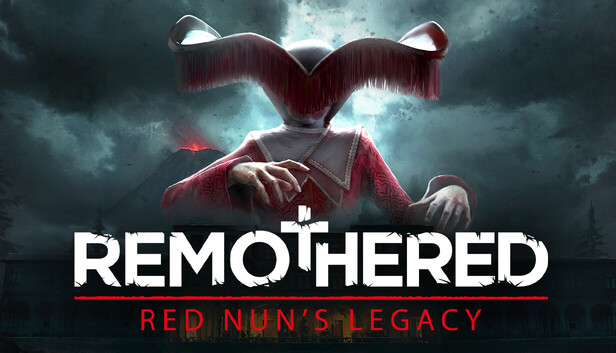
The villa hides clues in objects, reflections, and a mysterious moth swarm. This spoiler-light guide turns Stormind's confirmed hypnosis powers into a practical exploration routine.
Think like an investigator before looking for a button prompt
Remothered: Red Nun's Legacy gives Susan more than a flashlight and a reason to run. Stormind Games says hypnosis becomes the foundation for three new abilities that change how she explores Villa Ashmann: Retrocognition, Secrets in Mirrors, and Moth Manipulation. These powers are tied to perception and memory, so the most useful first habit is observation. Enter a room, note unusual objects and reflective surfaces, and ask which detail seems deliberately placed. The game may be asking you to understand a space before asking you to escape it.
This is a spoiler-light guide based on Stormind's official ability breakdown and design diary. It does not claim to know every location, item requirement, or exact puzzle solution. The distinction matters because an invented route can ruin both your progress and the mystery. Use the methods below to make better decisions when the villa feels confusing, then let the actual clues on screen determine your next move. If a particular power has not yet awakened in your save, keep that room in mind rather than assuming you missed a prompt.
Metronomes introduce the risk behind the powers
Stormind says Susan encounters metronomes throughout the villa. They draw her into a hypnotic state and open visions connected to objects, places, and people. The studio describes each session as placing her mind at risk as the trance deepens. That wording establishes a thematic cost but does not provide a numeric health penalty, a timer, or a resource meter. Do not build a strategy around an imaginary meter. Watch the game's tutorial and interface for the rules that apply to your current version.
Before beginning a new interaction, orient yourself. Where is the nearest exit? Which hallway leads back to a safe landmark? What object or symbol drew your attention here? This is good survival-horror discipline even if a specific metronome moment is scripted. It lets you distinguish a clue from background detail and helps you recover your route when the camera, lighting, or perspective changes. In a game where stalkers can interrupt exploration, a mental map is often more useful than speed.
Treat hypnosis as part of the story, too. The ability does not simply highlight collectibles. Stormind says it reveals memories and helps Susan reinterpret what she sees. Listen to dialogue, read notes, and compare visions with facts already established. A memory fragment may clarify a relationship or turn an apparently ordinary object into a progression clue. The safest method is to record the connection in a few words rather than trying to memorize every line under pressure.
Retrocognition: let the object tell you what matters
Retrocognition is the clearest of the three powers in Stormind's explanation. Certain objects carry symbols and echoes of the past. Before the ability awakens, they can seem like curious but silent items. Afterward, framing a symbol correctly can open a memory. Stormind says this can reveal buried conversations, story fragments, puzzle clues, and connections between events. The phrase 'certain objects' is important: it is a targeted system, not permission to assume every vase or cabinet hides a vision.
A practical routine is to inspect an unusual object from more than one angle. If you see a marking, move the camera slowly and let the symbol sit clearly in frame. Do not thrash the view around because one pass failed. Check whether the game indicates that the ability is available, and consider whether you are in the right story phase. If nothing responds, note the object's room and come back after gaining new information. A missed connection may be caused by timing, perspective, or a different clue rather than a broken puzzle.
When a memory plays, ask one question: what changed about my understanding of this room? A conversation might name a person, a location, or a relationship. A sound could point to a nearby mechanism. A visual fragment might explain why an earlier clue mattered. You do not need to solve every thread instantly. Collect a small set of concrete observations, then compare them with the map and any written clues. This is more reliable than guessing a solution from atmosphere alone.
Secrets in Mirrors: search the reflection, then the room
Stormind describes mirrors as more than visual decoration. Before this ability fully awakens, interacting with one shifts to a detached and distorted perspective. Once active, movement within the mirror view can reveal hidden points of interest, visual distortions, and elements invisible in the ordinary room. The developer says discovered clues then manifest in the actual environment. That last step provides a useful two-part method: inspect the reflection first, then return to the physical space and look for the newly revealed interaction.
Scan the mirror view methodically. Start with the edges, then examine areas that differ from the real room. A distorted light, an odd outline, or an object absent from the ordinary scene may be relevant. Avoid assuming every visual effect is a clue; Stormind uses distortion to build unease as well. Once a point of interest is identified, turn back and check its real-world location. The power rewards spatial comparison more than random clicking. If you lose your orientation, use a doorway, furniture shape, or wall feature as an anchor.
Mirrors also suggest revisiting old rooms. Stormind explicitly says they encourage nonlinear exploration. If a room held an unexplained mirror during an earlier visit, mark it mentally and return when the ability is available. That is a better use of backtracking than searching every corridor without a lead. Make one short route with two or three candidate rooms, then return to the main objective if none reveals a new clue. Backtracking should be purposeful, especially when the villa is dangerous.
Moth Manipulation: expect discovery, not a made-up solution
Moths are a familiar part of Remothered's imagery, but Stormind says their role changes in Red Nun's Legacy. The swarm becomes an active part of exploration and progression. The studio deliberately withheld the exact workings, telling players to discover them while playing. That means there is no honest universal input sequence to recommend from the announcement alone. Watch how moths move, where they gather, and what parts of the environment respond when the ability becomes available in your game.
If a moth-filled area seems important, compare it with the clues you have already collected. Does a vision mention a place, person, or object nearby? Is a door inaccessible in a way that suggests an environmental interaction? Does the game teach a new control at that moment? These questions help you reason from what the game actually shows. Do not force a theory because a swarm looks dramatic. Horror games use repeated imagery to set mood as well as to guide progress, and the two functions can overlap.
The studio's broader claim is that the powers can open paths, uncover secrets, reveal story fragments, and help solve puzzles in unexpected ways. That describes their role, not a checklist of guaranteed actions for every room. The good habit is to recognize when an environment changes after a power activates. Revisit the visible puzzle state, inspect new objects, and check the route you thought was blocked. If nothing changed, you may need another clue or a later ability. Staying curious beats repeating the same interaction fifty times.
A spoiler-light exploration loop for the whole villa
Use a simple sequence: observe the room, inspect marked objects, compare mirrors with the ordinary view, listen for memory clues, and return to previously noted locations when a power awakens. Move deliberately between these steps. During a stalker encounter, the priority changes to finding space and surviving; you can return to interpretation when the immediate threat passes. This guide does not claim a fixed stealth pattern or guaranteed safe room, because the official ability post does not provide one.
Keep your notes short. Write 'symbol on cabinet near stairwell' or 'mirror showed something beside door' instead of a long transcript. The detail should be enough to bring you back to the right place. If you prefer to play without external notes, use an in-game map or journal where available, but do not assume the game tracks every unresolved clue for you. A few personal landmarks can make the villa feel navigable without spoiling its surprises.
Most of all, let the three powers change your questions. Retrocognition asks what an object remembers. Mirrors ask what your first viewpoint missed. Moths ask you to read movement and environment together. Stormind built them to deepen the psychological mystery, not just decorate a checklist. That is why a measured, observational approach can feel satisfying even when you do not find the answer on the first pass. If you want a broader first-session survival plan, our earlier beginner guide covers stealth and pacing; this one stays with the hypnosis systems.
FAQ
What are the three hypnosis abilities?
Stormind names Retrocognition, Secrets in Mirrors, and Moth Manipulation. It has not published every interaction or puzzle solution.
Can I use Retrocognition on every object?
The official description says some objects contain relevant symbols and memories. It does not say every object can be activated.
Is this a puzzle walkthrough?
No. This guide explains the confirmed systems and a spoiler-light way to investigate rooms.
CHECK THE ORIGINALS.
Facts and update details above are based on these official sources. Details can change as the game is updated.
- The Power of Hypnosis ↗Stormind Games
- Third Dev Diary: Shaping Fear Through Design ↗Stormind Games
- Remothered: Red Nun's Legacy official game page ↗Stormind Games
Loading comments…