Sonic has appeared in real educational products, but a Sonic logo alone does not make a game a lesson. Here is a source-backed guide to the classics, newer options and useful questions for parents.
The short answer: there is no single Sonic learning-game category
Searching for Sonic the Hedgehog learning games turns up three different things: older educational software, current Sonic games that invite problem-solving, and Sonic-branded learning toys. We checked the museum record, a LeapFrog parent guide, and current publisher or store listings to separate those claims. The distinction matters more than a list of familiar blue covers: a child who needs reading practice needs a different product from a group that wants to practice cooperating.
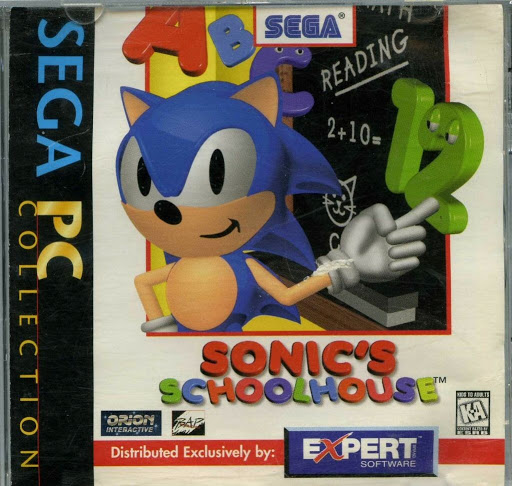
Sonic's Schoolhouse is a historical PC educational game in The Strong National Museum of Play collection. LeapFrog lists a Sonic cartridge in its Leapster2 guide. Both use older hardware. Steam describes the newer SONIC PICO PARK as a cooperative action puzzle, not a literacy or math course.
Our recommendation is to decide what skill you want a child to practice before choosing a Sonic product. Then check platform, age guidance, the actual activity and current availability. We have not conducted a hands-on assessment or measured learning outcomes for these products; the suggestions below are ways readers can evaluate them for themselves.
- Want an explicitly educational Sonic game? Start with the historical Schoolhouse and Leapster listings, then check whether you can legally use the required hardware.
- Want a current Sonic game for shared problem-solving? Inspect SONIC PICO PARK's live store page and play together if its features suit your group.
- Want letters and numbers in a Sonic-branded physical activity? Clementoni's talking pad is a toy, not a video game.
Sonic's Schoolhouse: the real educational PC classic
Sonic's Schoolhouse is not a newly announced 2026 release. The Strong National Museum of Play has a physical copy in its collection, and the museum image gives this article its game-specific cover. That collection record is valuable evidence that the title exists; it is not proof that the original software will install on a current Windows PC or that a particular reseller is safe.
Historical descriptions commonly connect Schoolhouse to classroom-style activities. We would still check the actual box, manual or a lawful copy before promising a specific grade-level outcome. A task that asks a child to select an answer is different from a game that teaches why that answer works. If your aim is arithmetic or spelling, watch what feedback follows a wrong choice and whether the child can explain the next attempt in their own words.
There is also a practical purchase problem: old PC software can depend on operating systems, disc drives and display modes that today's computers lack. The museum's object page is a collection record, not a download link. Treat listings claiming instant compatibility or an official remaster cautiously unless the publisher confirms them. Do not hand over payment information to a site just because it uses the Sonic name.
If you already own a working copy, ask the child to describe one problem before clicking and explain the result afterward. That makes their reasoning visible without claiming the old game replaces a modern curriculum.
- Evidence: a museum catalog entry and photographed physical game cover.
- Best reason to revisit it: an interest in Sonic's education-game history.
- Before buying: verify the copy, operating system, seller and any required original hardware.
The Leapster Sonic game: check the cartridge and the device
LeapFrog's official Leapster2 parent guide places a Sonic title among its game recommendations for roughly ages five to eight and early school grades. That is a stronger starting point than an anonymous marketplace description because it comes from the device maker. It also has limits: a historical recommendation does not mean the cartridge is still sold new, will fit every LeapFrog product or covers the exact skills your child needs today.
The word 'Leapster' is easy to confuse with newer LeapFrog systems. Before purchasing, match the cartridge label to the device model, check the device's condition and look for the original instructions. The guide says Leapster2 can use Leapster cartridges, but a different product family should never be assumed compatible. Batteries, screens and physical cartridges matter as much as the educational claim when buying older hardware.
We would ask a seller for a clear photo of the front and back of the cartridge and confirmation that it loads on the named device. For learning value, ask what the child is actually asked to do: read a prompt, recognize a pattern, solve a number problem or simply press a button at speed? An advertised age range is a shopping filter, not evidence that one child will learn from it.
If you own the cartridge, sit beside the player for a short session. Let them predict an answer and explain the feedback. Can they explain a rule without the screen? That is a question for your household to observe, not a result from a NEXPLAY playtest.
- Primary source: LeapFrog's Leapster2 parent guide.
- Historical target: the guide lists Sonic with early school-age software.
- Purchase check: cartridge, model compatibility and seller condition before price.
A newer option: SONIC PICO PARK teaches cooperation only if you make room for it
The official Steam listing describes SONIC PICO PARK as a Sonic-themed cooperative action puzzle game for two to eight players, with local and online multiplayer. Its store status and release timing can change, so use that live page for the latest availability. The game is a timely option for families seeking Sonic-themed teamwork, but calling it a school learning game would overstate what the developer promises.
Why might it still be useful? A co-op puzzle gives players a reason to share observations, agree on an order of actions and revise a failed plan. Those are opportunities created by the format, not a measured benefit of this specific game. Playing silently or letting one person issue every command could remove most of the conversation. The skill comes from what the group does around the game.
Before a level, ask each player for a plan. During the attempt, use short location-based calls. Afterward, ask what changed. 'What did we miss?' invites more thought than 'Why did you fail?' Pause if frustration takes over.
Check the live store listing for release state, age guidance, accessibility and supported platforms. Multiplayer listings do not guarantee that every household has the necessary accounts, controllers or connection. We have not played a final build.
- Official genre: cooperative action puzzle, not a curriculum product.
- Possible practice: explaining plans, listening and adjusting after a failed attempt.
- Reality check: watch what players actually say and do; do not infer learning from a Sonic logo.
A Sonic learning toy is another category entirely
Clementoni sells a Sonic Interactive Talking Pad whose official product page describes letters, numbers and Explore, Quiz and Memory Game modes. That sounds closer to an early-learning brief than many current Sonic video games. It is also a physical talking pad, not a console or PC game. That distinction should appear before anyone follows a recommendation and finds they need a toy rather than software.
The maker's product description tells us what the pad is designed to offer; it does not establish that it improves reading or math scores. If a child already knows the prompts, the challenge may be too easy. If the audio or language does not fit their needs, the branded character will not fix that. Check the local product language, batteries, age guidance and availability before ordering.
After a quiz prompt, ask the child to find a matching letter in a book or count real objects. This is a parent-led suggestion, not a tested learning claim from Clementoni.
How we would choose a Sonic activity for a real child
The useful filter is a learning target, not a mascot. If the goal is school practice, choose an activity with explicit prompts and feedback. If the goal is cooperation, choose a game that genuinely requires two people to coordinate. If the goal is just joy and familiarity, a standard Sonic platformer is fine without attaching an educational claim to it. SEGA's Sonic Origins is an example of a modern collection of platform games; its official description does not sell it as a math or reading program.
Pick one task, ask the child to explain it before and after playing, and see whether the idea works elsewhere. Stop when it ceases to be fun. Product pages cannot certify outcomes for your child.
Finally, revisit the source date. Museum collections document history, old parent guides describe past device support, and live store pages show current status. None proves learning progress. Sonic offers historical educational games, a newer co-op option and a branded toy, each for a different purpose.
- Name the skill: reading, numbers, music, coordination or simply entertainment.
- Match the format: old PC disc, Leapster cartridge, current game or physical toy.
- Confirm the source: original maker, museum record or live official store page.
- Observe one session: can the child explain the idea beyond the screen?
- Check again later: availability, compatibility and pricing can change.
FAQ
Is Sonic's Schoolhouse a real learning game?
Yes. The Strong National Museum of Play catalogs Sonic's Schoolhouse as a video game. It is a historical PC educational title, so check compatibility and legitimate availability before making plans around it.
Is SONIC PICO PARK an educational Sonic game?
It is advertised as a cooperative action puzzle game, not a school curriculum product. Families can use it to practice talking through a plan, but that is a suggested activity rather than a proven learning outcome.
Can I buy a new Sonic Leapster cartridge today?
LeapFrog's parent guide documents a Sonic learning cartridge for older Leapster hardware. That historical listing does not establish current stock, compatibility with modern devices, or an official digital download.
CHECK THE ORIGINALS.
Facts and update details above are based on these official sources. Details can change as the game is updated.
- Sonic's Schoolhouse collection object ↗The Strong National Museum of Play / Google Arts & Culture
- Leapster2 Parent Guide (PDF) ↗LeapFrog
- SONIC PICO PARK on Steam ↗TECOPARK / Steam
- Sonic Interactive Talking Pad ↗Clementoni
- Sonic Origins official site ↗SEGA
Loading comments…