Dual Fusion's rental decks offer a practical way to learn the new dual-type Mega Pokémon. This guide shows how to compare openings and make careful collection decisions.
Use the rental decks before building your own
Dual Fusion is live in Pokémon TCG Pocket, bringing dual-type Mega Mewtwo X ex and Mega Greninja ex into the spotlight. The Pokémon Company says six rental decks are available from the expansion launch until December 15, 2026, at 5:59 p.m. PST. That is a useful testing space: you can feel how a list plays before deciding which cards deserve your pack resources.
The publisher describes the two Mega Pokémon by their types, but a type label alone does not explain a complete battle plan. You also need to understand energy requirements, attack text, supporting Pokémon and how the deck handles an awkward opening hand. Rental decks provide a controlled starting point because their lists are already assembled and ready to play.
This guide does not claim a solved meta or invent card statistics. Open each live card in the app for current numbers, then use the method below to compare actual games. A handful of honest observations about your own matches is more useful than a tier list written before many players have tested the expansion.
- Try both featured rental decks before spending pack resources.
- Compare weak openings as well as strong finishing turns.
- Check event deadlines in the live app.
Judge the opening, not only the finish
Start several matches with the same rental deck and record the first two turns. Did you have a useful Basic Pokémon? Could you attach the energy that the deck's main attacker needs? Did you draw a support card at a time when it helped? A deck's best final attack is exciting, but its average opening determines how often you reach that point.
If you lose early, identify the exact bottleneck. Perhaps you had the right attacker but no way to prepare it. Perhaps your hand contained several cards that all needed another piece. Those are different problems. Avoid changing your future custom list until you know whether the issue is a bad draw, a mistake in sequencing or a structural weakness.
Try the same test with the other featured rental deck. The goal is not to declare Mega Mewtwo X ex or Mega Greninja ex universally stronger. It is to find which set of decisions you understand more clearly and which support cards you are closer to owning. Personal fit matters when collection resources are limited.
Read dual typing as a set of options
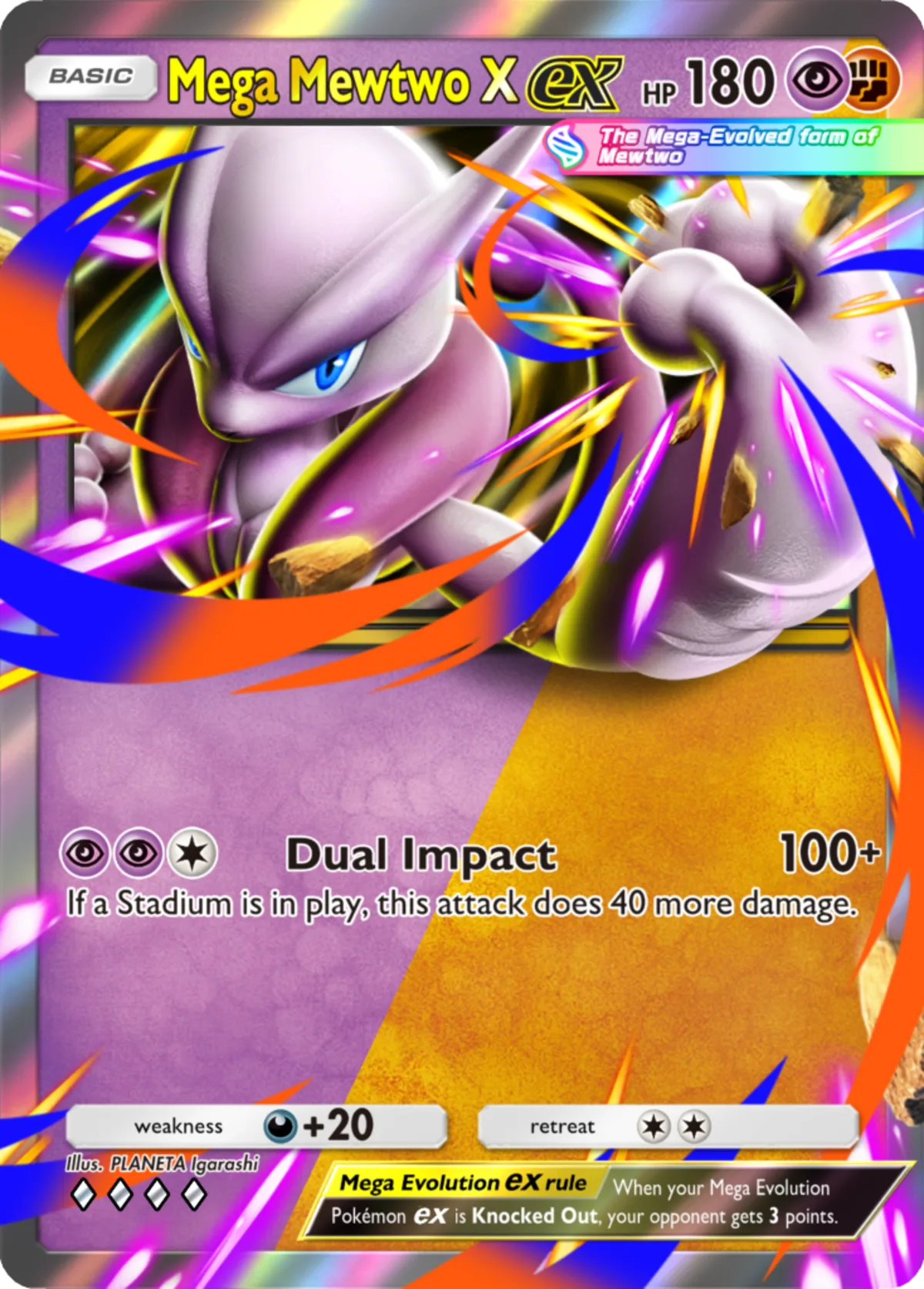
The official announcement identifies Mega Mewtwo X ex as Psychic and Fighting, and Mega Greninja ex as Water and Darkness. That dual typing is the expansion's main hook. Still, do not assume a card automatically solves every matchup associated with either type. The live rules, attack text and your deck's energy production determine what it can actually do in battle.
When you inspect a card, ask three questions: what must be in play before its attack works, what does it cost to use repeatedly, and what happens if the opponent removes the setup piece? Then compare those answers with a familiar single-type attacker. This simple comparison exposes tradeoffs without pretending that a broad label is a complete strategy.
Pay attention to the opponent's board too. A strong attack can be wasted into a target that was already under pressure, while an earlier conservative move may preserve energy for a better turn. New cards encourage experimentation, but good sequencing still comes from reading the current board and deciding what your next draw needs to accomplish.
Make each rental match answer one question
Rental decks can tempt you to play many games without learning why a result happened. Give each short session a question. Does the deck recover after a weak opening? Can it win without drawing its headline Mega card immediately? Which supporting card most often makes your turn easier? You do not need a spreadsheet; a few notes after a match are enough.
Avoid judging a deck solely by a lucky opponent or a single high-roll. Play against different styles and note when your plan slows down. If a defensive opponent gives you time to prepare, ask whether the same sequence would survive faster pressure. If an aggressive opponent overwhelms you, ask whether a different opening line was available.
The official article says the current rental decks will be replaced when the next booster pack releases. That creates a real reason to try them now, but it is not a reason to rush a purchase. Use the window to discover the cards you enjoy piloting. Once you know that, your collection decisions can be narrower and more deliberate.
Do not ignore the gifted elite deck
The Pokémon Company says a Dragon-type elite deck is sent to Gifts. Its published lineup includes Mega Rayquaza ex, Dragonair and Gouging Fire. This is a different route into the update than the two featured Dual Fusion rental decks. Claim it and read the list, then decide whether it gives you a useful comparison for your own collection.
A gifted deck is a chance to learn a coherent game plan without immediately crafting around a new card. Play a few matches and look at how the deck moves from setup to attack. Notice which cards are flexible and which ones appear essential. Even if you eventually prefer a Dual Fusion Mega deck, the elite list may teach you something about efficient sequencing.
Do not assume the gift will remain unclaimed forever. The current app should show its claim rules and any expiry. Likewise, do not confuse the elite deck with a reward guaranteed by the anniversary ticket. The publisher describes those as separate offers. Check each screen before planning your play time around it.
Use event missions to shape practice
The second-anniversary campaign runs through December 14, while the PROMO Reissue events end November 12 and Handy Card Collection Missions extend into January 2027. Those windows give you a practical way to choose what to do first. If you are testing rental decks anyway, see whether an active mission can be completed during the same session.
A mission is useful when it nudges you to learn a mechanic, but it can also distract from the question you meant to test. Finish a short set of clean practice games before swapping to a task-specific deck. That keeps the results comparable. You can then pursue promo cards or Trainer rewards with a better understanding of how those cards might fit.
At the end of the week, choose one deck direction and list only the missing cards that would change its performance. Keep pack resources for those gaps. Dual Fusion offers plenty to collect, but a focused play plan will teach you more than opening at random and hoping a compelling card turns into a complete strategy by itself.
CHECK THE ORIGINALS.
Facts and update details above are based on these official sources. Details can change as the game is updated.
- Dual Fusion Is Now Available ↗The Pokémon Company
- Dual Fusion Expansion Coming Soon ↗The Pokémon Company
- Official Mega Mewtwo X ex Card Reveal ↗The Pokémon Company
- Pokémon TCG Pocket Gameplay FAQ ↗The Pokémon Company
Loading comments…