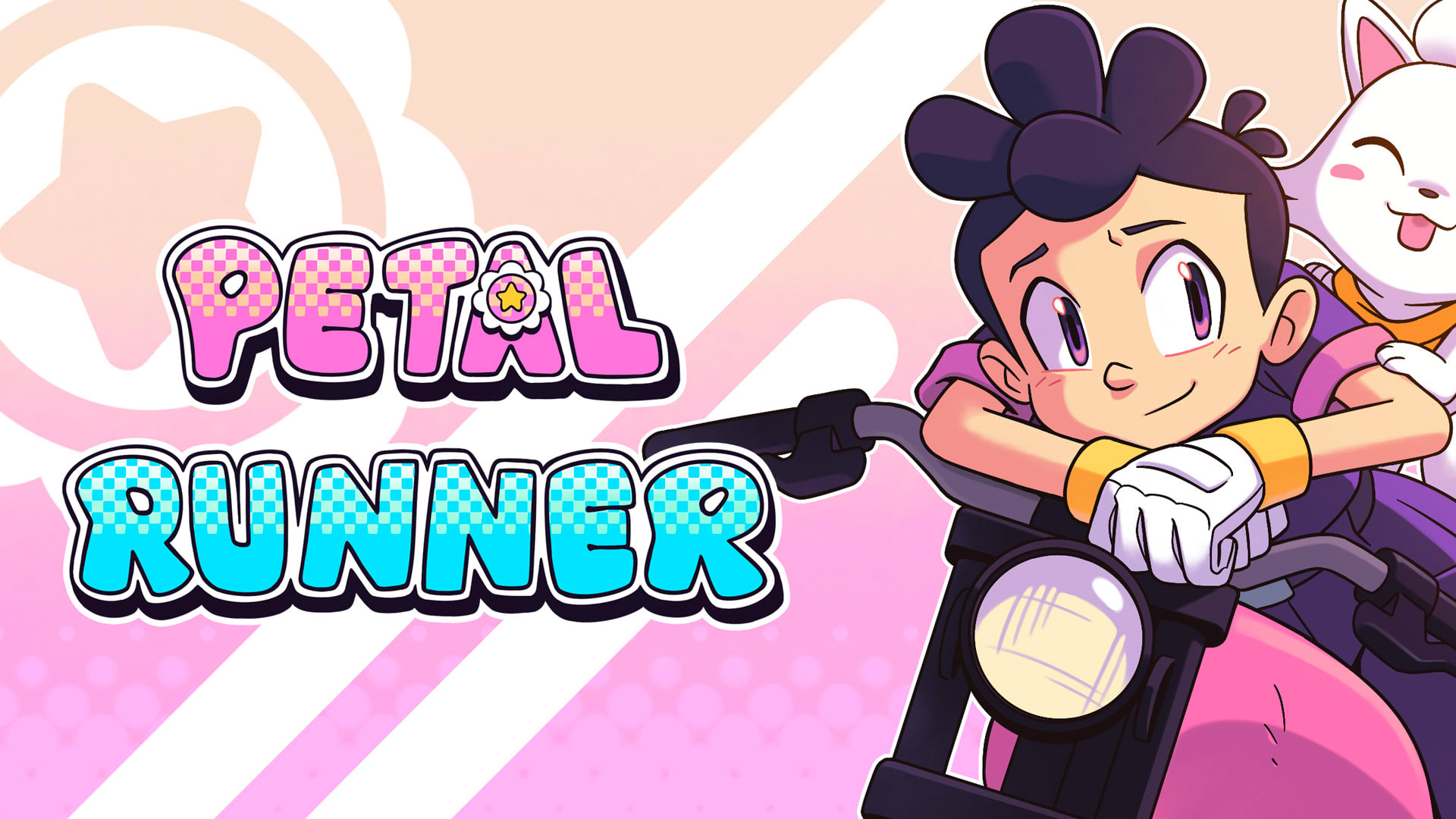
Petal Runner turns courier work into the center of a bright, story-led adventure. Its confirmed mix of motorcycle traversal, digital-pet deliveries, four districts, side quests, and a corporate mystery gives this pixel-art world more than pretty streets to ride through.
A solarpunk city built for the delivery route
Petal Runner uses a familiar job—delivering things around town—as the foundation for a more unusual adventure. Nintendo describes Cali and their fox sidekick Kira as aspiring motorcycle couriers bringing a new generation of digital pets to a coastal city. The world is solarpunk and rendered in pixel art, with four districts that have their own characters, color palettes, and atmosphere. That is a specific foundation for exploration: travel is not just how you reach a mission, it is part of the fantasy.
A courier role gives an open world a natural reason to send the player across town. Each delivery can introduce a new neighborhood, character, or local problem without requiring the story to constantly invent a crisis. Nintendo’s description also mentions side quests, mysteries, concerts gone wrong, ghost hunts, heists, and missing persons. These are confirmed examples of activities, not a complete mission list. The mix suggests that Petal Runner wants the everyday work to coexist with stranger stories rather than become a repetitive package checklist.
Motorcycle traversal can make the city feel connected
Nintendo highlights motorcycle traversal through pixel-art streets, highways, and back roads. That detail is central because movement can give a small map personality. A delivery route is more memorable when the player learns how different streets connect and begins to recognize the city by its landmarks. Riding can also create a satisfying rhythm between short story moments: pick up a job, cross a district, meet someone, and move on to the next lead.
We do not yet have a full control breakdown or a map scale from the official page, so it is too early to claim the game has a seamless huge world or advanced vehicle physics. The confirmed phrase is a pixel-powered open world with motorcycle traversal. What players can watch for in the demo is how riding feels at different speeds, whether routes reward curiosity, and how quickly the game lets you get back into action after a delivery. Those small details often decide whether a courier game feels relaxing or like a chore.
Digital pets make the courier work personal
The central delivery concept is not ordinary parcels. Cali and Kira deliver and install digital pets for new homes, according to Nintendo’s official listing. That gives the work a softer, more character-driven angle: each delivery can be connected to a person waiting for a new companion. The game also promises many digital pets to meet, deliver, and help settle in. That phrasing suggests that the player’s work involves more than leaving a package at the door, although exact care systems and interactions have not been fully detailed.
A good delivery loop can turn small tasks into emotional beats when the destination matters. If each pet has a distinct look or personality, the act of bringing it to a new home can help the world feel populated by individual stories. That is a design possibility implied by the description, not a claim that every pet has a deep simulation. The official page confirms a cast of digital pets and a story about life, loss, and what people carry with them. Players interested in narrative details should look for how these deliveries connect to the main campaign.
Four districts can give the open world a readable structure
Nintendo says the city contains four distinct districts, each with unique vibes, characters, and color palettes. This is useful for orientation as well as art direction. A player can associate a route with a district’s visual identity, remember where a particular character lives, and understand how the city changes as the story moves. The game’s pixel-art style can make these boundaries especially clear through color and architecture, helping the world feel varied without losing its coherent coastal setting.
Districts can also support a gradual learning curve. A new area might introduce a different kind of side activity or social group, while familiar streets become shortcuts once the player knows the layout. The publisher does not specify how open the districts are or whether every road is available from the beginning, so avoid assuming a particular unlock structure. The confirmed features are enough to set expectations: exploration spans multiple distinct neighborhoods, and the city is designed to be a place with local character rather than a generic backdrop.
The cozy surface has a mystery underneath
Petal Runner is described as a coming-of-age story, but Nintendo also mentions a corporate mystery simmering beneath its wholesome campaign. That contrast gives the game room to shift tone. Players can enjoy colorful streets and small character moments while gradually learning what is happening behind the city’s digital-pet economy. The official description does not name the corporation or reveal the mystery’s solution, and this article will not guess. The important feature is the combination of a warm everyday premise with a longer question pulling the story forward.
That structure can help a slice-of-life game maintain momentum. Delivery jobs provide a regular cadence, while a mystery can give returning players a reason to connect clues across districts. Side stories about ghost hunts, heists, and missing persons add further texture around the central plot. None of that guarantees a particular writing quality; it simply describes the announced design. If you prefer games where exploration is tied to characters and unanswered questions, the blend gives Petal Runner a stronger narrative hook than a pure traversal sandbox.
Minigames and side stories keep the route from feeling samey
Nintendo’s store description calls out quirky minigames, side quests, mysteries, concerts gone wrong, ghost hunts, and heists. Those examples imply that a delivery route can lead into different kinds of play. A minigame can offer a quick change of pace, while a longer side quest may reveal more about a resident or neighborhood. The range matters because repeated deliveries can become predictable if each one asks the player to do the same task in the same way.
The official materials do not say how many minigames there are or how much time they take, so we should not promise dozens of activities. What is confirmed is variety in the kinds of stories and challenges the city can present. When trying the demo, notice whether these activities are naturally woven into exploration or separated into menus. A lively open world feels cohesive when a player can discover an unexpected event while riding to a job, rather than being pulled away from the city every few minutes.
There is a demo, and the launch window is clear
Nintendo lists Petal Runner for Nintendo Switch 2 with a March 8, 2027 release date in Australia, and its showcase says a free demo is available now on eShop. The showcase calls it a console exclusive for Switch 2. The game’s official store listing identifies publisher iam8bit and gives a 500 MB estimated file size. Regional storefronts can display dates and availability differently, so check your local listing before downloading or adding it to a calendar.
The demo is a good chance to test the game’s core promise directly. Try a delivery, spend time riding between locations, and see whether you feel curious about the streets around the objective. Pay attention to how readable the pixel art is in motion and whether the motorcycle controls feel comfortable. A demo cannot reveal the full corporate mystery or campaign arc, but it can answer the most basic question: does moving through this world feel pleasant enough that you want to keep exploring?
Who should keep Petal Runner on their wishlist?
Petal Runner may appeal to players who like narrative adventures, pixel art, relaxed exploration, and small tasks tied to a larger story. Its motorcycle courier role offers an easy-to-understand reason to explore, while digital pets and a coming-of-age plot give the deliveries a personal angle. The solarpunk setting and four districts give it a recognizable look, and the announced side activities promise variety. Players who want fast combat or a sprawling simulation with fully detailed vehicle systems should wait for more gameplay before deciding whether it matches their tastes.
For now, the strongest reason to follow Petal Runner is how its pieces fit together. Travel connects the city, delivery introduces characters, and the corporate mystery gives the colorful daily routine a longer arc. Use the demo to judge movement and atmosphere, and rely on the official Nintendo listing for current feature and release details. That is a better way to build expectations than assuming every open-world game offers the same scale. Petal Runner’s pitch is more intimate: ride the coast, meet the people and pets who live there, and see what the city is hiding.
CHECK THE ORIGINALS.
Facts and update details above are based on these official sources. Details can change as the game is updated.
- Petal Runner – Nintendo Switch 2 ↗Nintendo Australia
- New Indie World Showcase features cosy and chaotic fun ↗Nintendo
- Petal Runner on Steam ↗Nano Park Studios / iam8bit
Loading comments…