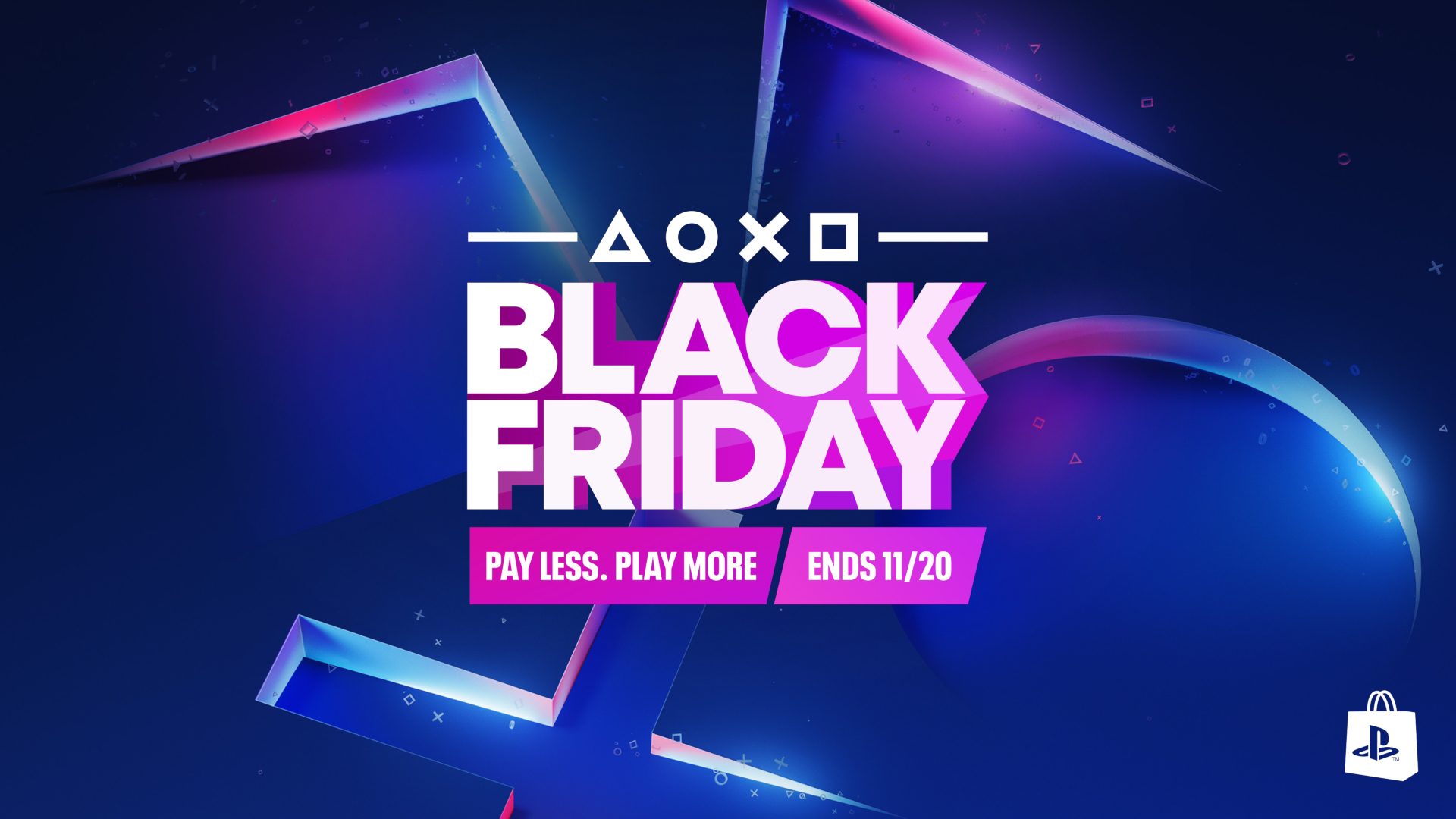
Sony has dated its 2026 PlayStation Store Black Friday promotion. The sale begins November 4, refreshes November 16 and ends November 30, with some deals ending earlier.
The sale opens November 4 and runs to November 30
Sony says its PlayStation Store Black Friday 2026 promotion begins November 4 and runs through November 30. Discounts of up to 75% are advertised across thousands of PS5, PS4 and PS VR2 games, expansions and DLC. That 'up to' figure is a ceiling, not a promise that any specific game receives a 75% reduction. The complete game list and local prices are due to appear on the Store when the promotion starts.
There are two timing details worth reading closely. Sony says the sale refreshes November 16, and some discounts end November 20 before the wider promotion ends. The offer that appears on opening day is therefore not necessarily the same list you see in the second half of the month. If you spot a price you want, check that product's actual end date instead of relying on the overall sale banner.
The official blog warns that promotion terms and percentage discounts can differ by region. It describes a midnight start in PST, GMT and JST terms rather than one universal local clock. If you are outside those regions, use your own Store page to check when an item becomes purchasable at its sale price. We are not inventing a currency conversion or a global unlock minute.
- Promotion start: November 4, 2026.
- Scheduled refresh: November 16, 2026.
- Some individual deals may end: November 20, 2026.
- Overall promotion end: November 30, 2026.
- Advertised maximum discount: up to 75%, varying by product and region.
- Eligible categories: PS5, PS4 and PS VR2 games, expansions and DLC.
Why the refresh matters more than the banner
A sale headline compresses many separate offers into one date range. Sony's fine print says some discounts will end November 20 and some deals will be replaced with new offers. That means a player planning one shopping session on November 29 could miss a game that was discounted earlier. Another player buying everything on November 4 could miss an offer added on November 16. Neither schedule is automatically right.
Our editorial suggestion is to make two short check-ins: one when the sale opens and another on November 16. On opening day, note each game's current price and the displayed offer end date. At the refresh, compare the items that were not discounted yet. This simple method is more useful than assuming 'Black Friday' names one fixed catalog for four weeks.
The Store product page is the authority for an individual purchase. It can show a regional currency, edition, compatibility label, subscription discount and precise expiration. A general blog post can announce the campaign but cannot replace those per-game details. We would not publish a list of 'confirmed 75% off games' before Sony reveals the actual catalog.
The same caution applies to DLC. A discount on an expansion does not imply that the base game is included, and a base-game sale does not automatically discount its season pass. Read the product title and edition contents before checking out. That is ordinary buying discipline, but a large promotion makes accidental assumptions especially easy.
How to tell whether a game deal is actually useful
The best deal is the game you would genuinely play at a price you are comfortable paying. A dramatic percentage can distract from an inflated starting price, an edition you do not need or a backlog you will not touch. We would compare the final checkout price, the included content and the platform version before comparing discount badges.
For a PS5 owner, check whether a listing is the native PS5 version or a PS4 edition playable through compatibility. For PS VR2, check the headset requirement and whether any controllers or additional content are needed. Sony says the promotion spans all three categories; it does not say every discounted item works on every device. The Store page is where compatibility belongs.
If you subscribe to PlayStation Plus, compare the purchase with games already available to you through monthly claims or the rotating catalog. A sale price can still be worthwhile for a game you want to own independently of a subscription, but it changes the value calculation. Also check whether the Store presents an extra subscriber price in your region. We are describing a decision method, not promising that a particular title has a Plus discount.
Our useful question is 'would I buy this without the countdown?' If the answer is no, the clock is doing more work than the game. That does not make every limited offer bad; it helps separate a genuine wishlist opportunity from urgency created by the interface.
- Check the final local price, not only the percentage.
- Confirm the edition and platform version.
- Check the product's individual offer end date.
- Compare with your existing library and subscription access.
- Decide whether you would actually play it soon.
What this means for players and publishers
The sale arrives during a crowded November release window. For players, that creates a choice between discounted older games and new releases at full price. Neither category wins automatically. A polished older title can be a better use of limited time; a new game can be worth supporting at launch if you want to participate in its community immediately. The relevant constraint is your own budget and playtime.
For publishers, a two-stage promotion can give different games a chance to be noticed rather than bury everything under one opening-day rush. That is our interpretation of Sony's refresh schedule, not a stated internal strategy. The public fact is that deals refresh November 16 and some offers are replaced. Whether that helps discoverability will depend on what Sony actually features.
Community lists can be helpful once the campaign is live, but screenshots go stale quickly. A post made on November 4 may be wrong by November 16, and prices differ by region. If you share a deal, include your region, currency, edition and the date you checked it. That small habit makes a recommendation much more reliable to another player.
We would also avoid claiming that a game is at its 'lowest price ever' without a verified price history for the same region and edition. Sony's announcement does not make such a claim about any title. A strong sale article can tell readers when and how to check offers without pretending to know prices that have not been published.
What to do when the promotion goes live
Open the PlayStation Store for your own region after the November 4 launch. Search your wishlist first, then review the official Black Friday category. For each title, open its product page and record the exact price and expiration. Repeat after the November 16 refresh if you still have items you want. If a deal ends November 20, do not assume the November 30 campaign end protects that item.
The short answer is that PlayStation's Black Friday 2026 promotion has a confirmed start, refresh and finish, but no complete public item list in the announcement we checked. We can report those dates confidently. We cannot tell you which unannounced game to buy at an unannounced price. The most useful guide is therefore a clear calendar and a way to judge real offers once they appear.
CHECK THE ORIGINALS.
Facts and update details above are based on these official sources. Details can change as the game is updated.
- PlayStation Store's Black Friday Deals 2026 ↗PlayStation Blog / Sony Interactive Entertainment
- PlayStation Store ↗Sony Interactive Entertainment
Loading comments…