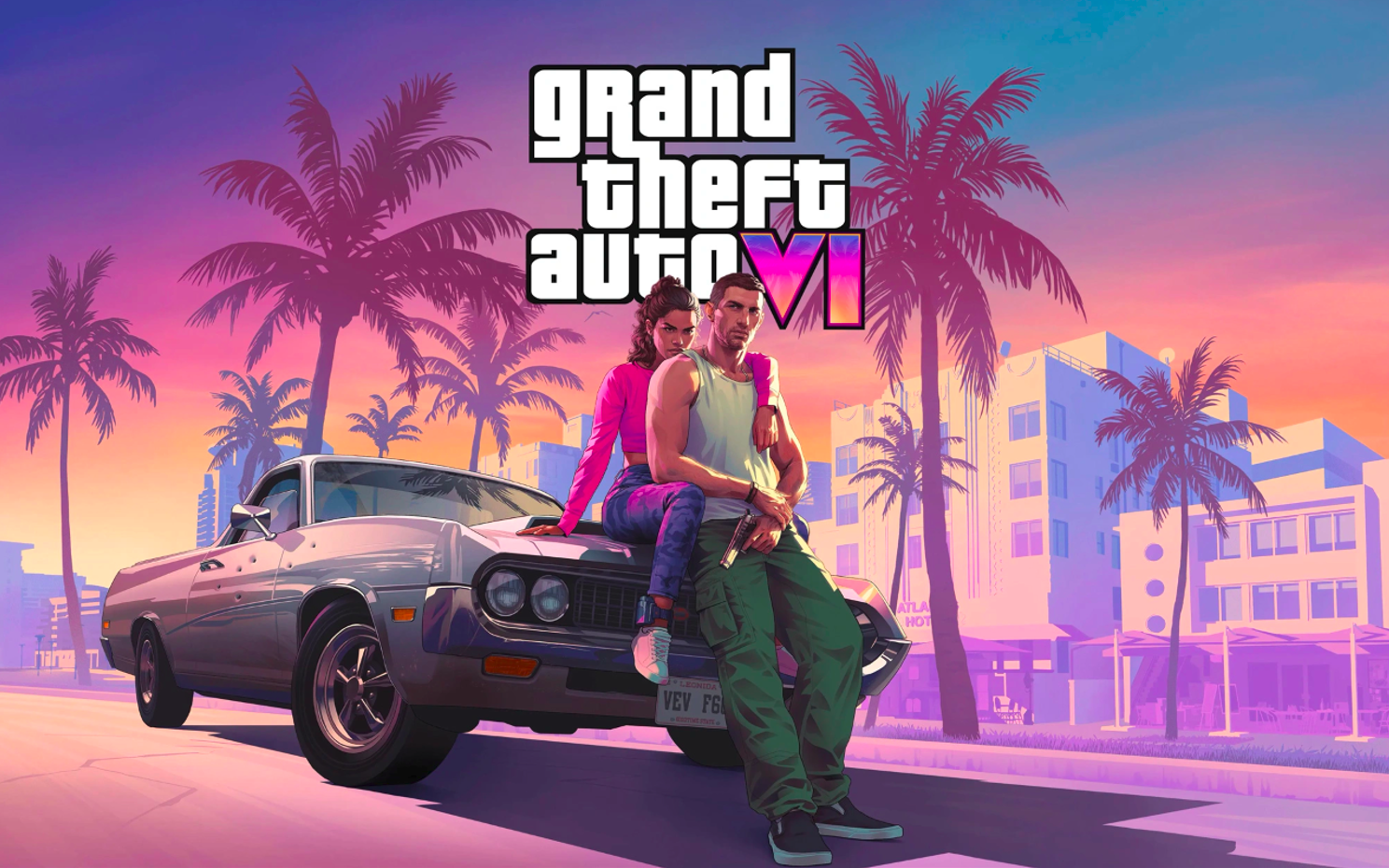
A behind-the-scenes report on GTA VI offers a rare look at Rockstar’s production process and how the studio changed while making its most ambitious game. We separate reported details from what Rockstar has formally confirmed about the November launch.
A rare look behind Rockstar’s most anticipated release
A new Bloomberg Businessweek report goes behind the scenes of Grand Theft Auto VI, speaking with Rockstar staff about the years of work behind the game. The story covers the project’s scale, the studio’s production culture, and the decisions involved in building a new version of Vice City. It is useful because Rockstar usually shares carefully selected trailers and announcements rather than a day-to-day account of how its teams work.
The report is journalism based on interviews and company access, not a Rockstar patch note or a full technical postmortem. That means players can learn how developers describe the work, but should not treat every observation as a final feature confirmation. A detail about a production decision does not automatically mean the corresponding mechanic will appear in the released game exactly as discussed.
Grand Theft Auto VI remains scheduled for November 19, 2026, on PlayStation 5 and Xbox Series X|S according to Rockstar’s official site. That platform and date are the practical details for players planning a purchase. The Bloomberg story adds context about how the project was made, while Rockstar’s own page remains the authoritative source for launch information.
Why a project this large can take years to come together
Bloomberg describes a development process that began before the game entered full production and expanded as Rockstar brought more of its organization onto the project. The report says the studio had 2,441 employees when Red Dead Redemption 2 shipped in 2018 and 4,711 by August 2026. Those figures illustrate the scale of Rockstar’s organization, but they do not mean every employee worked on GTA VI full time.
A modern open-world game combines many departments and systems: writing, animation, art, audio, mission design, engine technology, quality assurance, localization, and platform certification. Teams have to coordinate those pieces so they work together in a world players can explore without feeling like disconnected features. More people can help with that workload, but larger teams also need clear communication and shared tools.
The report also describes how leadership weighed creative ambition against delivery schedules. Rockstar’s staff told Bloomberg that the team wanted the game to meet its quality goals rather than ship before it was ready. That explanation gives players context for delays and scale, but it does not make an exact promise about the game’s final quality. Reviews and players will judge the released build for themselves.
A change in production culture is part of the story
One theme in Bloomberg’s account is Rockstar’s attempt to change how it organizes work. The report discusses more structured scheduling, clearer monitoring of progress, and efforts to reduce excessive overtime compared with the culture described around earlier projects. Those are meaningful topics because game development depends on the people making the art, missions, code, and performances—not only on the technology used to assemble them.
Changes to production culture are difficult to measure from outside. A company can describe a new process, but the lived experience may differ between teams, deadlines, and locations. The report offers interviews and context, yet it cannot speak for every Rockstar employee. It is best read as a snapshot of how leaders and developers describe the process at one point in a long production cycle.
For players, the connection is indirect but real. A sustainable schedule can affect how a team plans work, keeps experienced staff, and responds to problems. It does not guarantee that a game launches without bugs or that every idea makes it to release. It does give fans a better understanding of the human effort behind an enormous project than a trailer can provide.
World detail makes the production challenge visible
The Bloomberg feature discusses the care Rockstar put into Vice City and its surrounding regions. The game’s setting is built to support both scripted missions and free exploration, which means locations need to look convincing at different speeds and from different angles. Streets, buildings, interiors, and landmarks all contribute to whether a player believes the city continues beyond the immediate mission objective.
The report’s behind-the-scenes observations can make small design decisions feel more understandable. A road’s width, the placement of buildings, and the density of a block can affect how vehicles move and how the world reads from the camera. Those choices also create follow-up work for artists and designers. They are not just decorations; they shape the player’s route through a space.
Still, the public should not infer a specific gameplay feature from a production anecdote. A detailed city does not confirm that every building is enterable, that every object is interactive, or that the world uses any unannounced system. Rockstar has not published a full mechanical breakdown. Trailers and official descriptions are the right reference for confirmed features, and the final game will show how the spaces work in practice.
Could the next Rockstar game arrive sooner? That is a hope, not a date
Bloomberg reports that Rockstar leaders believe the technology and production foundation built for GTA VI could help the studio make a future game more quickly. That is an expectation about what the studio may be able to do with tools, teams, and experience developed on this project. It is not an announcement that the next Rockstar game is already in production or that it has a release window.
A large studio can reuse parts of its engine, production pipeline, and internal knowledge, but a new game can still bring new creative and technical challenges. The benefits of shared tools depend on the kind of project Rockstar chooses next. A smaller follow-up, a new setting, or a different genre would each require its own design work, and the company has not publicly identified the next major release in the article cited here.
Fans may find the possibility encouraging after a long wait between major Rockstar releases. The careful way to phrase it is that company leaders hope the next project will take less time because of what they have built for GTA VI. Any claim that a particular sequel will arrive in a specific year goes beyond the available confirmation.
What players should take away before the November launch
The report’s biggest value is context: GTA VI is not only a large map or a high-profile release, but the result of years of work by a growing organization changing how it plans production. That perspective helps explain why a project of this scale can take so long and why the studio has spoken about balancing ambition with scheduling. It also gives fans a reason to ask thoughtful questions about how games are made.
For practical planning, keep the official launch information separate from reporting on development. Rockstar currently lists November 19 and PlayStation 5 and Xbox Series X|S. It has not posted a PC release date on the official page. If a platform, edition, or launch schedule changes, Rockstar’s own channels are the source to check before reacting to screenshots or unattributed social posts.
GTA VI is one of the most watched releases of the year, so every interview can trigger a new wave of theories. Enjoy the extra insight, but do not turn it into a list of promised features the studio never announced. The production report helps explain the road to release; the game itself will answer whether that long road leads to the experience players want.
CHECK THE ORIGINALS.
Facts and update details above are based on these official sources. Details can change as the game is updated.
- Inside the Making of Grand Theft Auto 6 ↗Bloomberg Businessweek
- Grand Theft Auto VI Official Site ↗Rockstar Games
Loading comments…